QR Code Sizes: How Small (and How Big) Can a QR Code Be?
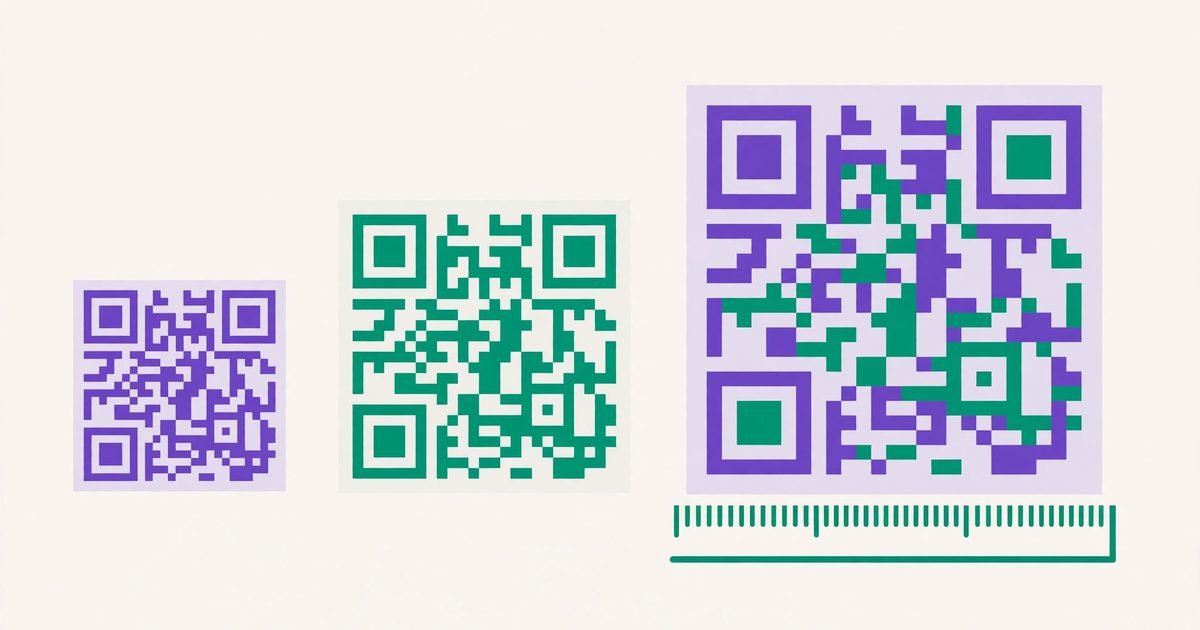
People ask two opposite questions about QR codes: how tiny can one be and still scan, and how huge can one get? Both have real, technical answers — and a simple rule of thumb that covers nearly every flyer, poster and product label you will ever print.
Create QR codes for links, Wi-Fi, contact cards, email, phone and SMS.
The rule of thumb: size ≈ distance ÷ 10
For reliable scanning, a QR code should be about one-tenth of the distance it will be scanned from. A code scanned from 30 cm (a hand-held flyer) needs to be about 3 cm across. A poster scanned from 3 metres needs about 30 cm. This is not a law of physics — it is the practical ratio camera apps handle comfortably — but it is the rule print shops use, and it keeps you out of trouble.
How small can a QR code be?
The smallest practical printed QR code is about 2 cm × 2 cm (roughly 0.8 inches) — and only for a simple code (a short URL, low version, high contrast, good print quality). Below that, phone cameras cannot resolve the modules reliably, especially in dim light. Three things let you go smaller: fewer modules (shorter content = lower version = bigger modules), high error correction (so a slightly imperfect read still works), and perfect print (no glossy glare, no low-resolution inkjet blur). On screens, the same code can be smaller because the display is sharp and backlit — but the 2 cm floor still applies to anything you print.
What "version" has to do with size
QR codes come in 40 versions. Version 1 is a 21×21 grid of modules; each version adds 4 modules per side, up to version 40 at 177×177. Short content (a short link) fits in a low version, so its modules are large and it scans from further away and smaller. Long content forces a high version, whose tiny modules demand a bigger print. That is why the same physical size scans fine for a short URL and fails for a paragraph of text: it is not the size, it is the density.
How big can a QR code be?
Technically, there is no maximum: a version 40 code can be printed as large as you like — the modules just get bigger. The practical limits are the medium and the camera: a code on a billboard must still fit entirely in the phone's camera frame at scanning distance, which is where the distance ÷ 10 rule comes back. Record-setting codes have covered whole fields and rooftops, scanned from drones and aircraft — impressive, but for normal use, "as big as the poster allows" is the answer.
Print checklist before you commit
- Quiet zone: leave a blank margin of at least 4 modules on all sides — a code crowded by text or borders scans badly.
- Contrast: dark code on a light background. Inverted (light on dark) codes fail on many scanners.
- Test at real size: print one copy, step back to the real scanning distance, and scan it with a normal phone in normal light — not just on your design screen.
- Shorten the content: a short URL makes a low-version code that scans smaller and further. Our QR Code Generator makes static codes for any link for free.
Frequently asked questions
What is the minimum size for a QR code on a business card?
About 2 cm square for a short URL. Business cards are scanned from 20–30 cm, so 2–2.5 cm is the safe range — test one printed card before ordering a box.
Why does my small QR code not scan?
Usually density (too much data in too few centimetres), poor contrast, a missing quiet zone, or glare on glossy stock. Shorten the URL, enlarge the code, and retest.
Does a bigger QR code hold more data?
No — capacity comes from the version (module count) and error-correction level, not the physical size. A huge low-version code holds less than a small high-version one; size only affects how far away it can be read.
What size should a QR code be on a poster?
Apply distance ÷ 10: if people scan from 2 metres, print it about 20 cm across. Bigger never hurts, as long as it fits the camera frame at that distance.
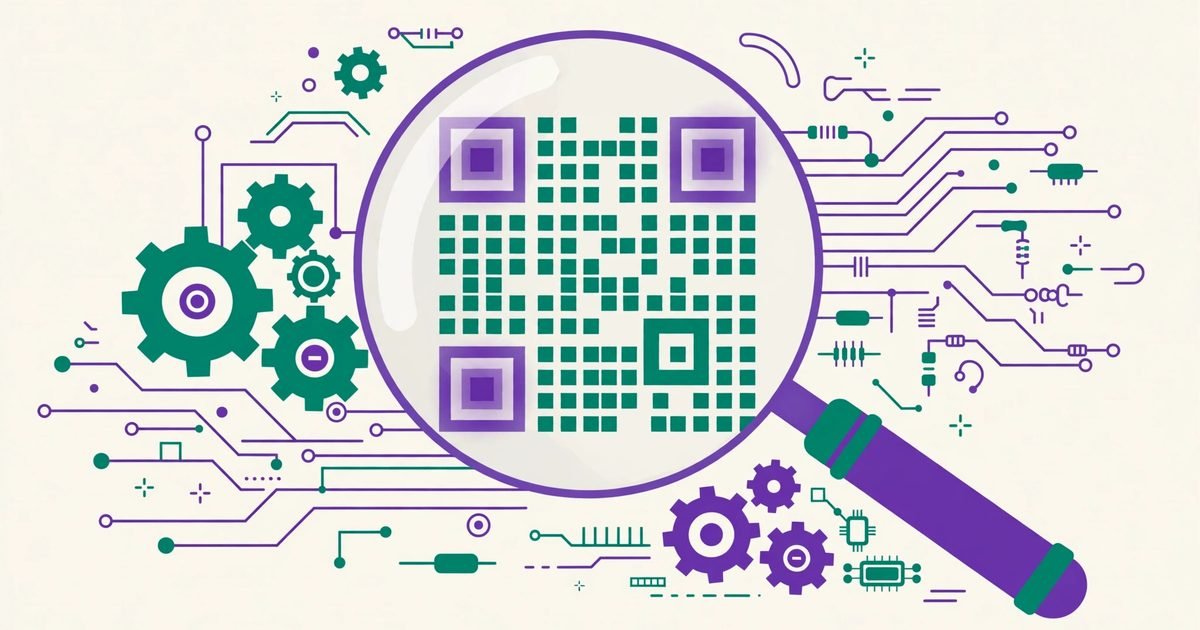 How QR Codes Work: Versions, Capacity, Static vs Dynamic & History
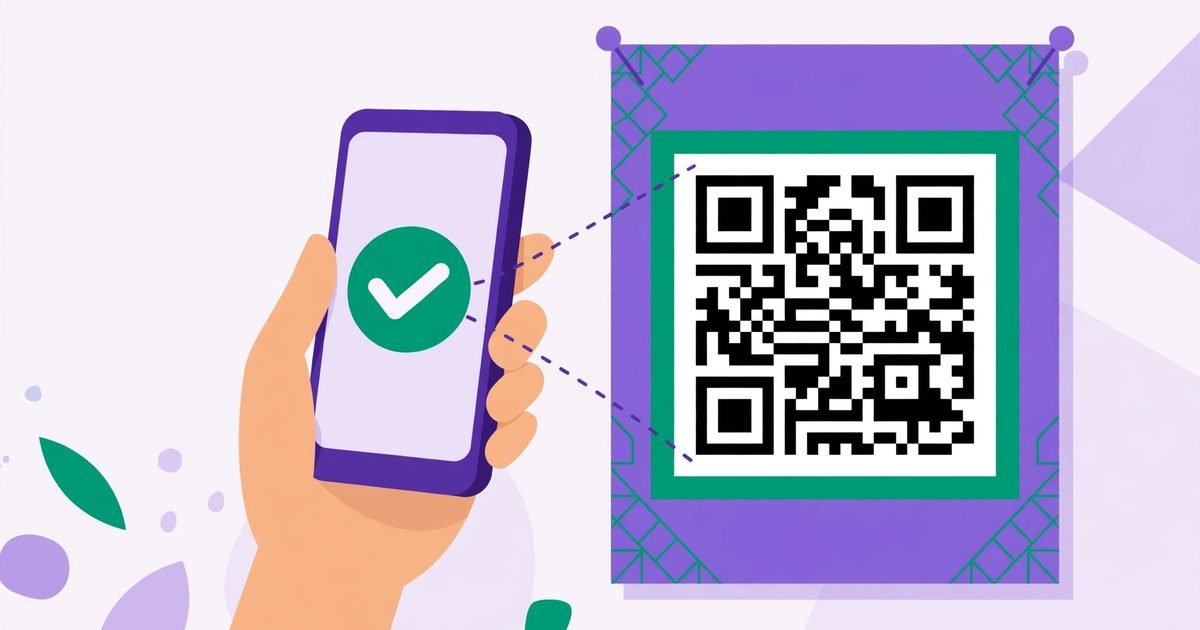 How to Scan a QR Code on iPhone (and Fix It When It Won't Scan)
 How to Make QR Codes for LinkedIn, Instagram & Facebook (and Flyers)